Friday, May 9, 2014

Monday, July 15, 2013
Alphabet-Painted Rocks
Have you been looking for some fun new ideas for arts and
crafts time? We are always trying to think of fun ideas to do with our kids,
and we have found one that is going over really great. Try painting rocks with
letters from the alphabet! It can be a great learning experience for your
toddler, and it’s fun for boys and girls!
You can make a game out of it too! Have your kids see who
can spell the most words in 5 minutes, or who can use all the rocks to spell
different words. The options are endless!

Monday, July 8, 2013
Time to Wash Those Hands!
Okay, so it’s no secret that germs are all around us. They
are in our food, on doorknobs, and virtually anywhere else we can imagine.
Scary, right? The good news is that we can prevent many harmful germs from ever
getting to us!
Hand washing is our first line of defense against the attack
of germs. Our hands go with us everywhere, and touch EVERYTHING. That includes
our eyes and our mouth, which is where many germs enter our body. By cutting
germs off at our hands, we dramatically decrease the amount that enters our
body.
So, we get it, hand washing is great for fending off germs.
Turns out, knowing is only half the battle! We can be great at washing our
hands consistently, but how are we supposed to convince our kids to wash their
hands too? One technique we’ve found that helps with our children is having
them sing their ABC’s as they wash. The kids love to sing, and it takes long
enough to where they get a healthy productive wash in. Now they have more fun,
they learn, and they stay germ-free!

Monday, June 24, 2013
Attention World Travelers!
Are you raising a little Magellan or Columbus? Does your
child talk about traveling the world? Perhaps someday they will, but for now, a
globe is a great start!
A Raised Globe can help your young explorer map out their
future voyages! To help them better understand where the countries and oceans
are, make a game out of it! Spin the globe and have them stop it with their
finger; once they do that, have them guess where it is! Kids can have a great
time learning about our planet, so when they are ready to travel, they already
know where they’re going!

Monday, June 17, 2013
It's a Scientific World!
Science can, and should be fun! The act of exploration and
discovering new things is enough to excite any scientist, no matter what age.
There is so much out there to learn about; it’s best to start now!
One of the most fun and educational ways to learn about and
discover new things is playing with a Microscope! Everything looks different
when it’s magnified to 300x, 600x, or even 1200x. Your children will have a
blast looking at different household objects through their Microscope. You can
even make a game out of it! Put items underneath the Microscope and see if they
can guess what they are.
If you run out of things to examine at home, consider the
Microscope and Slides Set. It includes slides that are pre-made, as well as
blank slides for kids to create their own! Your kids will be building a
laboratory in no time!

Tuesday, June 11, 2013
It's Garden Season!
Who doesn't love garden season? The sun is shining, and the
birds are chirping, and we all get to go to our own outdoor sanctuary to
harvest and grow our own fruits, veggies, and herbs. This year, perhaps you
should consider getting your children involved with you!
The benefits of youth gardening are vast. It teaches kids
the importance of taking care of the environment; it promotes healthy eating
(we all know how hard it is to get our kids to eat their vegetables…that is
until they grow their own); it is incredibly educational; and of course, you
get to spend quality time with your children! And let’s face it…your kids are
probably going to play in the dirt anyways…they might as well do something
productive while they’re at it!
It can be good for the kids to share mom and dad’s garden,
but they will enjoy one of their own much more. The Culinary Herb Garden comes
with everything your kid needs to start their very first REAL garden, and they
get to work on it right next to yours! With your help and the Culinary HerbGarden, they will be growing cilantro, parsley, and other herbs in no time.

Monday, June 10, 2013
Time For An Exciting Scavenger Hunt!
Do you live with a little explorer? Is your little boy or
girl constantly going on little “treasure hunts”? Why not make a game out of
it! Here is a fun idea for a two-part “distance” scavenger hunt to do with our
Big Tape Measure that can be exciting AND educational!
First, hide little “prizes” or “awards” around your house
and yard. After your child finds the items, they have to use their Big Tape Measure to record how long it is.
Second, have your kid use their tape measure to go find
items that are a certain length that you specify. After they successfully do
all that, have one grand prize they get for completing the hunt!
It can sometimes be difficult to help your kids learn, but
in the right scenarios and with the right tools, learning can be easy and fun!

Monday, May 6, 2013
Healthy Snacks that Kids Love
Are you on a
quest to discover new ways to get your kids to love their fruits and veggies? Look no further, here are some very
PIN-teresting ideas that will have your children asking, “Can I have more
please?”


Check out all of our favorites on our newest Pinterest Board: Healthy Snacks that Kids Love!


Check out all of our favorites on our newest Pinterest Board: Healthy Snacks that Kids Love!
Thursday, April 18, 2013
 |
| First Real Gardening Set (CPX-529L) |
Gardening with Kids
Now that April Showers have brought forth the beginning of May flowers, what better time than now to get your kids outdoors! Here are some great ways to get your kids involved with this wonderful outdoor activity.
• Safety - Gardening with your children is a great way to introduce them to an outdoor education activity that will peak their curiosity. If your child encounters a small creature they are unfamiliar with, this is a wonderful opportunity to answer his/her excitement with a talk about creatures and the environment.
• Learning - Another great aspect of gardening is that it enables your child to learn vital life-long skills including the ability to prepare a garden, making decisions on what to grow, learning how to plant and tend the crops, observing and harvesting, and most importantly, being able to reap the rewards of working on a long-term task. Giving your child exposure to gardening may not only connect them with nature, but also allows them to do something real, with tangible results!
• Ownership - Giving your child the chance to care for plants and the environment is also beneficial to their moral development. No matter how your child contributes to the garden, they have the ability to take pride in their work and feel like they belong to something meaningful! This simple activity paves the way for your child to understand the importance of other tasks like chores and schoolwork.
• Food - An integral part of gardening is giving your child the ability to learn about food they can grow. Observing a garden provides your child with lessons on topics as diverse as life cycles, the concept of change, or practice in measurement. Gardening can also encourage your child to learn the importance of harvesting and producing their very own vegetables! In the long-run, this promotes healthy eating as your child learns more about how fun it is to grow!
Friday, May 11, 2012
It’s time to Pretend
We can remember pretending as children and how exhilarating it was to use our imagination to transport us to other places while transforming us into pirates, princesses and dragons. As parents we know for our children pretend play provides a multitude of rich experiences that impact their moral, language, cognitive and physical developments. Hard to imagine one type of play could benefit them so much.
When our children engage in pretend play, they are actively experimenting with the social and emotional roles of life. Through this cooperative play, they learn how to take turns, share responsibility, and creatively problem-solve.
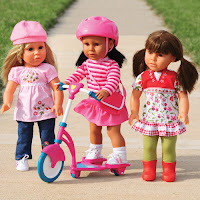
Typically pretend play is viewed as indoor, quiet fun. Spring provides us with such wonderful surroundings. The trees are in bloom, the grass is plush and the flowers are blossoming. This is the perfect landscape for your children to enjoy some quiet fun outside amongst nature’s beauty. With this in mind, we are featuring two of our exclusive pretend play educational toys with an outdoor influence to enjoy both indoors and out. For your little girls who love taking their Today’sGirl Doll everywhere they go, we have the adorable scooter set. Allow your 18-inch doll (Today’s Girl) to wheel around on her scooter with her friends. It’s the perfect way to provide pretend play with the great outdoors. For the rough and tumble boys who love to be so active our Everglade Patrol allows them to slow down just enough to fly overhead with the rugged seaplane and capture alligators from their swamp boat. The fresh air and sunshine will awaken their minds and they will pretend to be different characters; "walking in someone else's shoes," which provides the important moral development skill of empathy. And don’t forget pretend play helps your child understand the power of language. By pretend playing with others, they learn words give them the means to reenact a story or organize play. This process helps your child to make the connection between spoken and written language — a skill that will later help them learn to read. So think outside of the box and take some of your “inside” toys outside and discover how your children can learn and grow using their toys in a different way.

Thursday, May 3, 2012
Spring has Sprung
Get Those Bodies Moving!
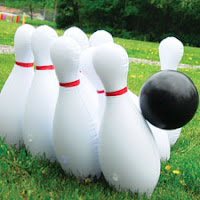


Get those bodies moving! Active play is so critical to children’s health, growth and development. Children’s brain development is directly related to moving their bodies. Studies show exercise in children improves memory and spatial navigation. The ideal physical play incorporates play with social interactions and problem solving. As these connections develop, a child's fine and gross motor skills, socialization, personal awareness, language, creativity and problem solving are improved.
Monday, April 9, 2012
Play Kitchens: More than Just a Cooking Class
Educational toys are all the rage these days. Toys that subtly help a child learn don’t have to be directly related to school, like number games or books. In fact, educational toys can help prepare children for responsibilities that come later in life. It seems like a lot of children just can’t wait to be a grown-up, and a play kitchen will serve as a stepping stone to utilize their maturity while still playing like the fun kids they are.
The Wooden Deluxe Kitchen is a solid fixture in any home, with shelf space for your child. The kitchen clock can be set for mealtime, and the timer will go off when the pretend food is ready. Kids can practice tidiness and hygiene with towels and aprons to hang on the rack and hook when finished.
Another great option is the Uptown Kitchen with Breakfast Bar and Two Stools. The play kitchen feels very natural with places to sit for your guests eager to “scarf down” the food your child pretended to cook. The play kitchen has a sleek look with desired dark wood and faux granite countertops. It’s as close to the real thing as you can get!
The best play kitchen for your child (and you!) is one that fits right in to the rest of your home décor. The very sturdy and wooden As Cozy As Home Play Kitchen comes with two pretend burners, turning knobs and cloth curtains above the sink. It comes with all the accessories you need, from food to dishes, silverware, blender, toaster and the works! Just like the others, pretend microwave and oven are included. Your child will feel like a professional chef in the greatest play kitchen with all the fixings.
Friday, March 2, 2012
Importance of Educational Toys in Early Childhood
Children from the time they are born are sponges when it comes to their ability to constantly learn through interaction and play when using an educational toy as foundation. These toys help promote a child to develop all of their senses, they will start to understand that there are colors, objects have different textures and shapes, and even help them start the process of learning the alphabet and numbers. By exposing your child starting from the time they are infants will ensure that they learn early and pique their curiosity to learn more the older they get and the more advanced toys they are exposed to.
Children from an early age are encouraged to have playtime, research has proven playtime to be vital when it comes to a child’s development at home. Children play in many different ways and toys allow them to become engaged with what they are playing with and in the end learn a new set of skills and logic through the toy.
When considering educational toys for kids the most important factor is to realize that there are many different types. Consideration must be made with regard to the fact that they are uniquely made depending on the child’s age and the pace at which they learn. This is especially important since children starting as infants learn in a sequence and attempting to provide them with a toy way beyond their means of actually grasping the education benefit will provide no use.
Infants, for example, are not as developed as toddlers and need an educational toy that will stimulate their touch, hearing and sight. Most toys made for infants are very colorful, bright and full of an assortment of shapes and textures. These types of toys introduce infants to a world they are not used to and build a foundation for their development. A toddler on the other hand is more likely to engage in pretend play attempting to mimic the grown up actions you do so providing them with toys that allow them to interact with your activities are most beneficial.
Whether your child is an infant or a toddler using a toy for education purposed is one of the most important things a parent can do, your child’s education is very important and every parent wants to give their child the knowledge and assets to excel now and in the future.
Wednesday, January 25, 2012
Educational Children’s Games
One of the most fun ways a child can develop and grow is through playing board games that have educational value. This engages the child; they are both having a good time with family and friends and learning about various things, depending on the game which they are playing.
One of the best and most enjoyable examples of an educational children’s game is Apples to Apples Junior. This game uses wild card comparisons which are fantastic at improving a child's creative thinking skills and vocabulary.
Essentially, there is a category each round, and the child must simply pick the card out of their stack that they think best represents the category. This game is not only easy to play but is fast paced and will keep everyone on their toes.
Another award winning game that is also a favorite with the kids is Cranium Cadoo. With this game, kids either work on their own or within a group doing all sorts of various outrageous and fun filled activities. The kids draw, sculpt, and solve puzzles, and act, all the while using a "secret decoder mask" to discover hidden answers. The first kid to get four answers in a row wins.
Another game with educational value for preschool aged children is Boggle Jr. This game will help teach children both reading and spelling in a fun, affective way. It also teaches word recognition, grouping, sorting, and even sharing with friends.
There are also the more classic adult thinking games that have now been converted into children’s games, such as Pictionary Jr. and Scrabble Jr. Pictionary Jr. teaches children to think on their feet. It also strongly teaches communication skills and teamwork. Scrabble Jr. has the ability to greatly expand your child's vocabulary. With Scrabble Jr. your child will be forming long words while competing and having fun doing it.
One newer children’s game that has come out has to do with trivia. It is called Beat the Parents and is great for not only parent child bonding, but learning about pop culture and other historical events from a different age. Essentially, the children quiz parents about things in their day and time and vice versa for the parents. The game has had great reviews from both parents and kids.
Educational Children’s Games are important for making learning fun and engaging for all kids.
Thursday, January 19, 2012
Educational Toys: Making Learning Fun for Children
Making learning fun has been a topic of discussion within the educational field for many years. Children seem to be less focused on learning tasks, leading to case studies for learning disabilities, as well as showing more interest in video games and sources that provide very little in the way of educational purposes. However, learning centers are a teaching method that has found a way to make learning fun for children by using educational toys .
Learning centers vary based upon grade level, student needs, teaching styles and other factors. It is very likely that no two centers look the same, but will typically focus on similar goals. Centers are designed to reinforce prior learning in the classroom, challenge students with new ideas or skills and to allow student interaction and fun. Learning centers take a holistic approach to teaching.
Teachers likely take varying approached to implementing learning centers in their classroom, but they will typically include a few key elements. There should be 3 to 4 centers throughout the classroom, students will work in groups at each center, at least one center should include educational toys and students should be working on prior and new skill sets. How these centers will look more specifically, depends on how the teacher evaluates their students.
Educational toys are a great resource for making learning fun. They work great for classroom settings, as well as continuing learning at home. Because there are educational toys that really are fun, children will enjoy playing with them on a regular basis.
Monday, November 21, 2011
Baby-conscious Retrofits Hit Home For New Parents
Most parents fear too much TV will harm their children. But they couldn't have predicted how the idiot box is injuring offspring all over the country. According to the Consumer Product Safety Commission, a federal regulatory board, children climbing on shelves and tables seriously injure themselves 8,000 to 10,000 times per year. And one specific type of injury—TV collapses—is on the rise. Kids furniture is often small and bottom-heavy so toddlers can't do much damage. But modern televisions are completely front-heavy—tough, heavy screens mounted to flimsy plastic stands—and very easy to tip.
Hidden dangers and accidents keep parents up at night and, thankfully, are easily preventable. Parenting publications have examined certain simple retrofits that can help protect the modern home. These are not your old plastic socket covers and sink-cabinet pull-latches. A few DIY additions can give you peace of mind that, no matter what your baby gets into, they get out of it ok.
Tie Back The TV: Most modern TVs can be mounted or fastened to keep it from tipping. Others can be placed in an entertainment center, behind closed doors. One thing parents should never do is place their new flat screen on a low, free-standing table that a toddler can climb onto.
Think Like A 2-Year-Old: Babies are very tactile in their explorations. They want to touch everything. And no room in the house has more soft things than the bedrooms. According to the owners of Safe And Sound Babyproofing, a Calgary-based retrofit service, most parents buy expensive baby furniture, shake it a bit to find its stability and think it is ok. But if you think like a 2-year-old, the best way to reach high places is to stand on the bottom drawer of any dresser. Most dressers, when put up against this test, will tip over. Checking your baby furniture before you buy against these safety concerns will save you many headaches in the future.
Mind The Blinds: A surprising number of children are strangled each year by mini-blinds, Safe and Sound reports. Children play with them, get them wrapped around their necks and choke. One simple fix is to install a cable wrapping hook that lets you tie back your blind cables when they are in use. This 50-cent piece of plastic can save you tons of worry down the line.
Tuesday, November 1, 2011
Buying a Play Kitchen May Help Your Child's Development
If your child comes home with an imaginary friend or wants to pretend he's in a fantasy world, it's probably not a good idea to discourage it. Children have had pretend friends and played kitchen for a long time and this may help their growth. According to numerous studies, imaginative and pretend play aid in the cognitive development of children. These children are more adept at functioning in a social setting and conceptualizing complex ideas. There are multiple reasons for this.
Pretend play allows children to play with one another and act out in a role. This encourages children to engage in social interaction and learn how to act with others. It creates empathy within the children because these children who are playing pretend are acting like someone else. They are putting themselves in someone else's shoes, which may help them accept differences in others. One WSJ article chronicling a few studies on early childhood development stated how those with autism don't usually pretend play and were less able to function in a social setting. Researchers are figuring whether there is a connection here.
Moreover, educational toys like a play kitchen help your children make sense of reality. It's hard for children to understand how things work. A play kitchen allows the child to become an active participant. He or she can run wild with his or her imagination and pretend it's a real life kitchen with ingredients and cooking pans. Once the child uses his pretend kitchen enough, he will be able to apply what he experienced to what he sees in a real kitchen. Toys that support pretend play and imagination are beneficial tools to foster this growth.

Friday, October 21, 2011
The Importance of Reading to Children
Reading to your children is a primary element in helping their development, in forming a close bond with them and directing them towards personal and academic growth. Reading to your children is a healthy habit that you are able to form from the time they are born; studies have shown that infants are soothed by the sound of their parent's voice. The American Academy of Pediatrics (AAP) "strongly recommends reading to children every day, starting after they are first born," because "reading stimulates the development of the brain, language and a closer emotional relationship with a child." As children develop, the reading process will become more interactive as they can follow along and begin asking questions for understanding.
Unfortunately many educators today are experiencing that children from various backgrounds are coming to school having never been read to before. It's not just children from lower income homes, but children from privileged homes as well who are spending more time in front of the television set, not interacting with their parents and siblings on a regular basis. Parents play a significant role in either encouraging or hindering child development.
Research has shown that children who are read to on a consistent basis are more likely to succeed academically. Children who are read to are able to form abstract concepts, they develop their imagination (rather than having the television do so for them), and build a broader vocabulary. So why is it then that many studies are showing that parents are spending less time reading to their children?

There can be a vast number of legitimate reasons why reading to your child can be difficult, primarily because finding the time together is hard. A few ideas might be to find a few stories on tape or CD and listen to them together while driving, to read while putting your child to bed- it's often helpful to read stories that you enjoy as well because you'll enjoy reading, or look into educational toys and interactive books. You might need to get creative to find time or ideas to read to your child with, but the benefits of doing so will last a lifetime.
Friday, October 14, 2011
The Importance of Educational Toys That Promote Arts and Creativity
Children who are introduced to the rich experiences in learning through interacting with artistic elements typically develop a number of skill sets important for lifelong learning. However, the No Child Left Behind Act has put more emphasis on students learning math and language, than to focus on specialty classes such as art and music. Still, 91% of schools in the country are teaching the arts, though all don’t receive the same funding for their programs.
The reality is that all schools aren’t created equal. It’s important that parents help to facilitate learning within their homes. Many educational toys promote arts and creativity, which can help your child round out the learning skills they might not be while in school.
There are a number of skills and abilities that are proven to be more developed in children who are involved in the arts. Some of which are: visual-spatial abilities, self-criticism, reflection, critical thinking and the ability to apply what they’ve learned from mistakes. These are skills that are important for lifelong learning and development, yet are ignored to certain degrees because of teaching to the test practices in the classroom.
Providing your child with educational toys that encourage arts and creativity gives them the opportunity to build upon these skills and areas. There are a number of studies that even show children who take part in the arts usually test with high marks on standardized testing. Allowing your child to create and further develop crucial learning skills will only benefit their learning abilities. It is important that your child has the ability to interact with educational toys which promote the arts and creativity.
Thursday, October 6, 2011
The Benefits of Active Play for Toddlers
The term “toddler” is used to describe young children between the ages of 1 to 3 years. During these early years there are many cognitive, emotional and social developments which help to mold a child into their future selves. In this phase of their life, environmental and learning factors are crucial for reinforcing positive and healthy growth in your child. Active plays games and educational toys are a great way to assist their development process.
As we age, our idea of being “active” is often associated with playing sports or working out at a gym. However, being physically active for children comes through their ability to play. Through play, children begin to build a foundation for learning by interacting with other children, adults and the world around them. Play is able to improve various aspects of a child's well-being, physically, emotionally and socially.

By providing opportunities for our children to play, we allow them experiences in which they can learn and develop. It's important that parents consider the environment they are introducing their children to, as well as the learning factors they will be exposed to. Active toys help to develop muscles, coordination and movement skills, while educational toys for kids help to reinforce opportunities for learning.
A nurturing environment helps to facilitate healthy development in your child. Help your toddler experience unique learning and development opportunities by providing them with active and educational toys.
Subscribe to:
Posts (Atom)